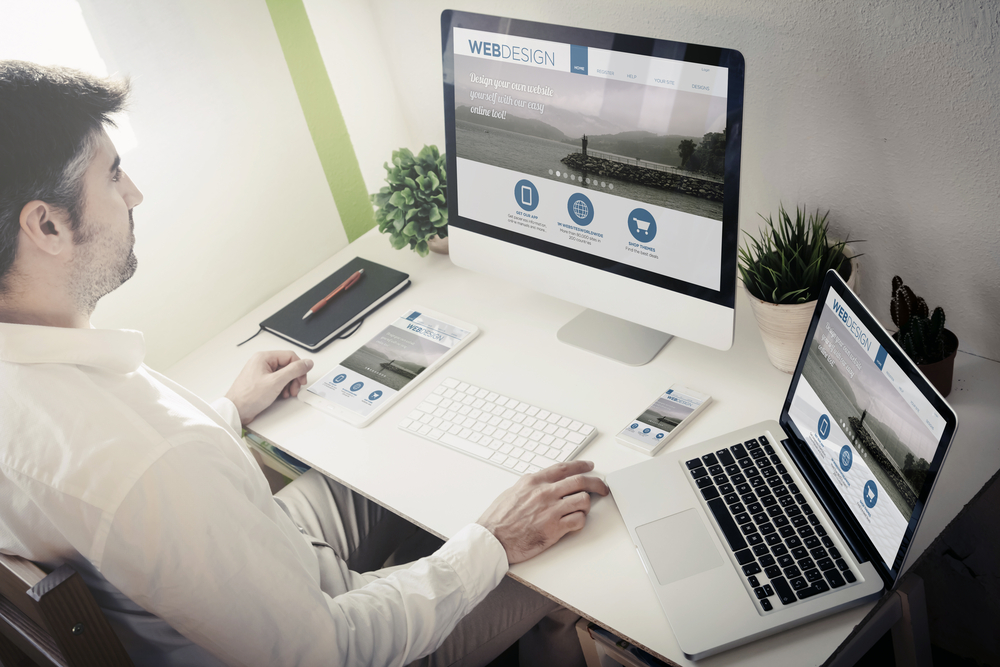

Creating a website that provides a positive user experience is essential for businesses that want to attract and retain customers. A website that is easy to navigate, loads quickly, and provides valuable content can help build brand loyalty, increase engagement, and drive conversions. However, with so many websites vying for users’ attention, it can be challenging to stand out and provide a truly exceptional user experience.
[bctt tweet=”Revamp your website and leave your users wanting more! Discover 10 ways to improve your website’s user experience and drive conversions today. ” username=””]
How can you improve your website’s user experience?
In this blog post, we will explore 10 tips to improve your website’s user experience, from simplifying navigation and optimizing load times to incorporating social proof and utilizing A/B testing. By following these best practices, businesses can create a website that not only meets users’ needs but also helps achieve their business goals.
- Utilizing White Space
- Simplifying Navigation
- Improving Load Times
- Mobile Optimization
- Clear Calls to Action
- High-Quality Graphics
- Using A/B Testing
- Maintain Accessibility
- Optimizing Forms
1) Utilizing White Space
White space, also known as negative space, is the area around design elements on a website that is left intentionally blank. Utilizing white space effectively can help improve the website’s overall design and user experience. You can make the most of white space on your website by highlighting important elements, creating a sense of balance, or even emphasizing minimalism.
2) Simplifying Navigation
Simplifying website navigation can help visitors find what they are looking for quickly and easily, which can improve their overall user experience on the website. You can simplify your website’s navigation by limiting the number of menu items, using clear and concise labels, and providing search bar functionality.
3) Improving Load Times
Load time is a critical factor in website user experience, as slow load times can lead to frustration and high bounce rates. There are several ways to improve load times on websites:
- Optimize images: Large image files can slow down a website. Compressing images without losing quality can help reduce file size and improve load times.
- Minimize HTTP requests: The more HTTP requests a web page needs to make, the longer it will take to load. Minimizing the number of requests can help improve load times.
- Enable browser caching: Enabling browser caching allows the browser to store commonly used files, such as images and scripts, locally on the user’s device. This can help reduce load times on subsequent visits to the website.
- Optimize code: Optimizing code can help reduce file size and improve load times. This can include minifying HTML, CSS, and JavaScript files, and reducing the number of script and style files.
- Use a fast web host: A fast web host can help improve load times, especially for websites with high traffic or large files.
- Use a content management system (CMS) that is optimized for speed: Certain CMS platforms are designed with page speed in mind and can help improve load times without extensive technical knowledge.
4) Mobile Optimization
Making a website mobile-friendly is essential in today’s mobile-first world. Use a responsive design that ensures the website adapts to different screen sizes and devices, making it easy to use on mobile devices. You can also start designing for mobile devices first, and then scale up for larger screen sizes. This approach ensures that the most important content and features are front and center on mobile devices.
5) Clear Calls to Action
Clear calls to action (CTAs) on website navigation are important because they guide visitors toward taking a specific action, such as making a purchase, filling out a form, or signing up for a newsletter. CTAs improve the user experience overall, by providing clear direction and thus increasing conversion rates.
6) High-Quality Graphics
High-quality graphics are important for website navigation for several reasons, such as enhancing visual appeal, increasing engagement, and building trust for your products or services. Overall, high-quality graphics are essential for creating an engaging and user-friendly website that effectively communicates a brand’s message and values. By investing in high-quality graphics, website owners can help create a more memorable and effective user experience for their visitors.
7) Incorporating Social Proof
Social proof is a psychological concept that refers to the tendency of people to conform to the behavior and opinions of others, especially in situations where they are uncertain or have limited information. In the context of marketing and e-commerce, social proof refers to the use of customer reviews, ratings, testimonials, and other forms of user-generated content to influence the purchasing decisions of potential customers.
It can be a powerful marketing tool, as it taps into the basic human tendency to seek out the opinions and experiences of others as a way of validating our own choices and actions. By highlighting positive social proof, businesses can create a virtuous cycle where satisfied customers attract new customers, leading to increased sales and revenue.
8) Using A/B Testing
A/B testing for website navigation is the process of comparing two or more versions of a website’s navigation menu to determine which version performs better in terms of user engagement and conversions. A/B testing involves randomly dividing website visitors into two or more groups, each of which sees a different version of the navigation menu. The performance of each version is then measured and compared using key metrics such as click-through rate, time on page, and conversion rate.
9) Maintain Accessibility
Accessibility for websites refers to the practice of designing and developing websites in a way that makes them usable and accessible to people with disabilities or impairments. This includes visual, auditory, motor, or cognitive disabilities, as well as age-related impairments or temporary disabilities such as broken limbs. It’s important for websites to be accessible because it promotes inclusivity, legal compliance, user experience, search engine optimization benefits, and ethical responsibility. By prioritizing accessibility in website design and development, businesses can create a more inclusive and welcoming online environment for everyone.
10) Optimizing Forms
Forms on a website can be optimized for website navigation by following some best practices that make them more user-friendly, intuitive, and effective in capturing the desired information. Here are some ways to optimize forms for website navigation:
- Keep it simple: Keep the form fields to a minimum and only ask for essential information. The more fields a user has to fill out, the less likely they are to complete the form. Also, use clear and concise labels for each form field.
- Use clear instructions: Provide clear and concise instructions on how to complete the form. Use tooltips, inline help text, and validation messages to guide the user and prevent errors.
- Use autocomplete and autofill: Implement autocomplete and autofill for common fields such as name, email, and address to speed up the form-filling process and reduce user frustration.
- Use visual cues: Use visual cues such as icons, colors, and animations to draw the user’s attention to important fields, indicate errors, and provide feedback.
Boost Website Conversions with Great User Experience
Optimizing website navigation is critical for creating a positive user experience and achieving business goals. By designing clear and intuitive navigation menus, simplifying website structure, reducing load times, and utilizing white space, businesses can improve user experience and help users find the information they need quickly and easily.
Get in touch with our web designers to always have a good user experience!

Alanah Beebee Brown is a Web Content Writer at ITVibes, Inc. She received her B.A. in Mass Communication from Sam Houston State University with an emphasis in film. Alanah found her love for writing throughout her years in college writing essays and research papers, and outside of school while writing film scripts, short stories, and song lyrics. Outside of writing, she enjoys singing, playing guitar, and video editing.